Diversity
Beginning in 1960, more men and women from different ethnic backgrounds found a voice and new materials in Western art.
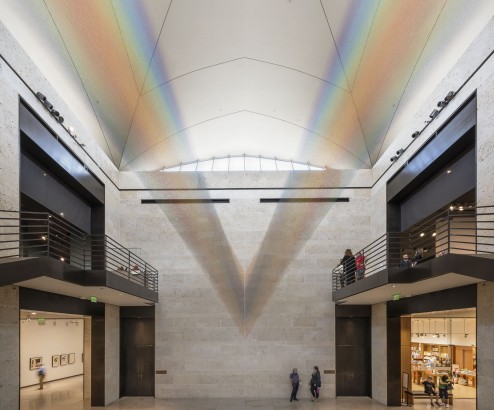
Amon Carter Museum of American Art
Plexus no. 34 by Gabriel Dawe was made in 2016 with gütermann thread, painted wood, hooks. This piece was commissioned for the Carter, it is large-scale andmade specifically for this site. It was made to look like frozen, Technicolor vapor. Gabriel Dawe is a Mexican-born, Dallas-based artist who specializes in sculptural marvels like this one. This piece is composed of 80 miles of thread in 18 different colors, making it one the largest pieces in the Plexus series. This piece was part of an ongoing effort by the museum to showcase more work by Texans. Dawe challenges everything from color to craft. When he was young he asked his grandmother to teach him how to sew, but she refused to teach him. Dawe challenges the “machismo” stereotype in different cultures by practicing his craft with thread. This relates to Diversity because Dawe is a Mexican-born man, practicing a craft usually done by females in most cultures. I love the use of lighting with this piece, it is so different. The materials used are beautiful, the placement is eye-catching, and the emotions I get when I look at it are awe-inspiring. It looks magical, sort of like a rainbow. I would display mini versions of his artwork on a shelf in my home, if that’s possible.
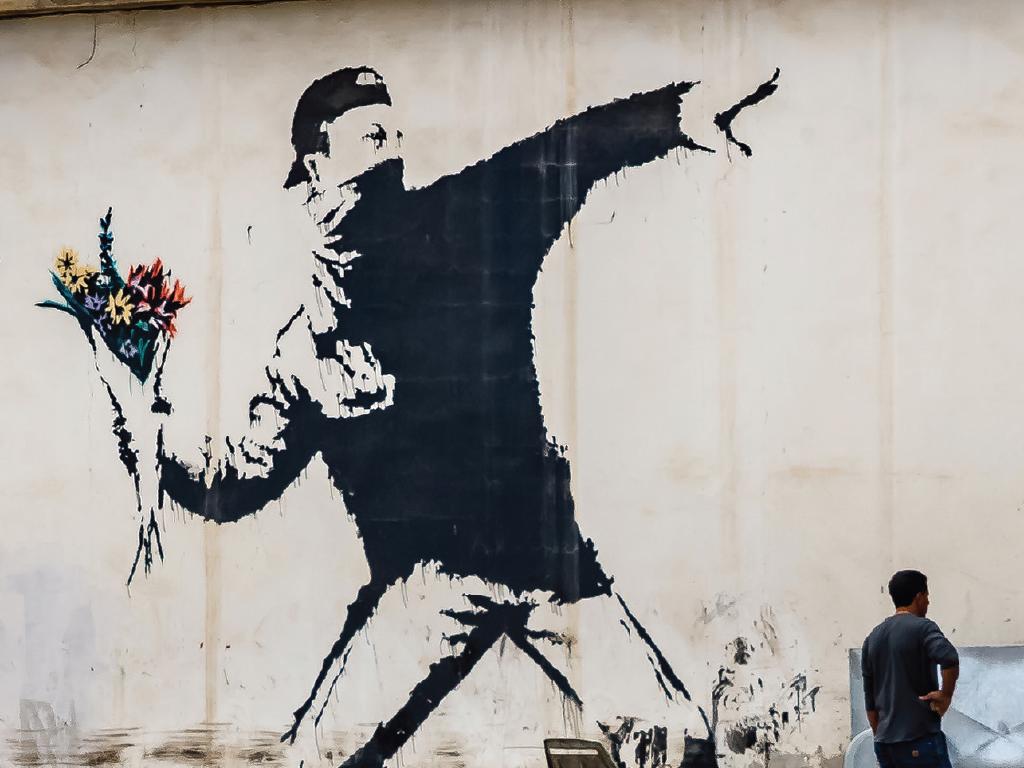
Rage, The Flower Thrower was created by Banksy in 2004. He is a street artist and for this piece he used stencil and spray paint. He has worked with many different types of street art media and street art types. Even though his work is widely known and recognized for how powerful it is, his identity still remains a mystery even after 20 years. Banksy’s use of shadowing in this piece, the body language, and emotion in this piece is very powerful. I can see the rage in the way the person is standing, his face is etched with frustration. He is aiming to throw the flowers at an exact target. This piece has been theorized to be about the need for peace instead of war. Another message I enjoyed was that we need to put effort and intention into our actions to achieve peace. The subject is using flowers as a weapon, which I think symbolizes love, joy, and forgiveness. The flowers are also the only part of the piece that uses color and I believe this is to symbolize the importance of practicing kindness. Using them for the fight for peace is powerful and it has an impact on everyone that comes in contact with it, just like this piece does. This piece relates to Diversity, because street art is another art form that has been accepted and recognized in Post Modern times. Personally, I would love to have this piece displayed in a collage of street art in my living room. The message that it sends is clear and powerful.
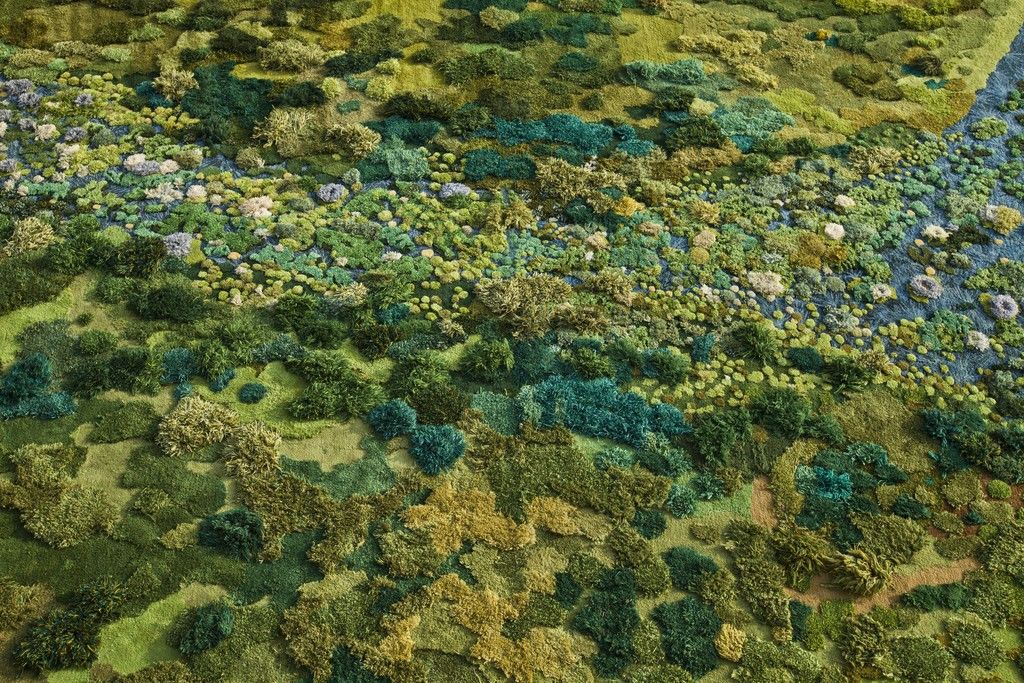
2016. Design Miami/Basel.
No Longer Creek, created by Alexandra Kehayoglou in 2016 is hand-tufted rug art made of wool. She a Native Argentine environmentalist that uses her talent to reflect on human impact on the natural landscape. This piece, in particular was a creek near her house that she grew up admiring as a kid called Raggio creek located about 10 blocks from the artist’s home—where the city meets the suburbs in Buenos Aires. It was destroyed to build a mall. This piece is on display and viewers are allowed to sit on the rug, Alexandra actually prefers if her art has some wear because it brings the piece to life. Viewers are encouraged to reflect on the effects of man-made landscaping. I think Alexandra took a special place, this creek and created a message about the importance of preserving nature. Her use of colors, her technique to create texture, is impeccable. It looks so realistic, and I can only imagine sitting on it and seeing it in person creates an even bigger impact on the viewers. I would love to have one of her pieces in my home, because she found a way to bring nature into people’s homes. Her values are beautiful and that is reflected in her artwork. This relates to Diversity, because hand-tufted rug art is fairly new, and this material and medium is now recognized as artwork as it should be.
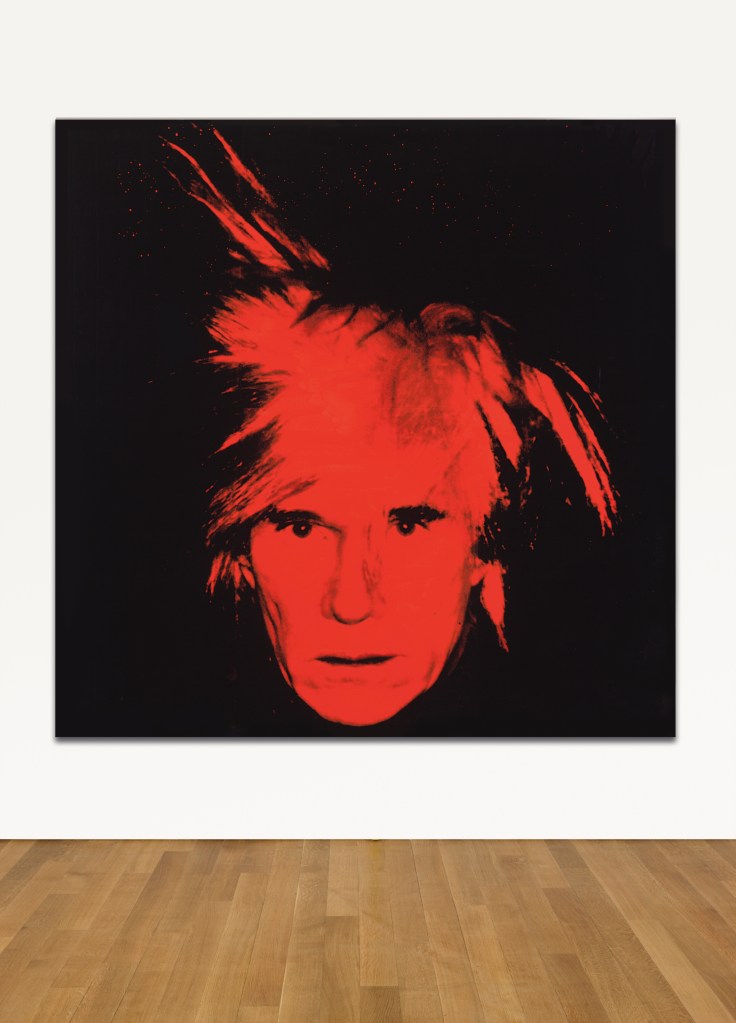
Self-Portrait, was made by Andy Warhol in 1986. It is made of synthetic polymer paint and silkscreen ink on canvas, located in the National Gallery of Art, in Washington D.C. This is arguably one of the most famous pieces of Andy’s. Almost everyone has heard of his name, and it’s crazy to think that he started out as a nerdy and shy artist. What I love most about this piece, is that Warhol created movement in this still image. This translates into Diversity, because of the use of new materials used in this Pop Art piece. He focused on Warhol’s head and wig, one of many he wore over the years. By using repetitive images, each slightly different, and overlapped the images, which produced the illusion of movement. There is a dramatic use of light and dark in this piece, which I am always drawn to. The contrast draws me in, and the expression on his face is raw, and full of emotion. I’m not sure what the exact emotion is, but it’s true and honest. I think this is Andy Warhol in full transparency, which is beautiful. There’s a lot of honesty in this piece. I would add this to my collage in my living room, next to a few other powerful pieces.
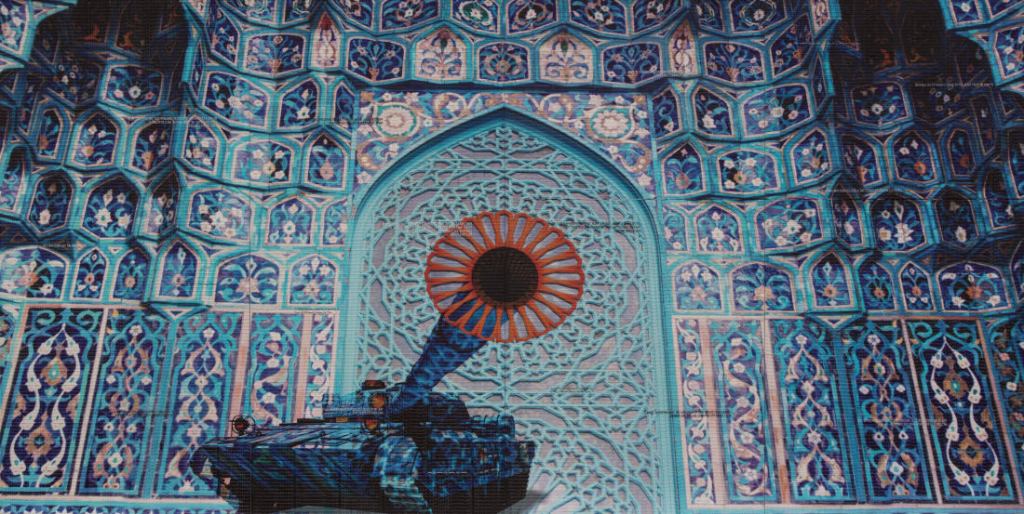
Camouflage, created by Abdulnasser Gharem is a digital print and lacquer paint on rubber stamps on aluminum. I’m unsure of where this piece is located, but what I do know is that Abdulnasser Gharem experiences as a soldier and a creator have resulted in these complex, somewhat provocative nature of his artwork. At first glance, this piece looked like a beautiful, intricate print of a flower blooming. Upon further inspection, I see that it is actually a tank. The flower looks like it is actually the blast of the tank going off. There are so many layers to this piece, that I could just keep staring at it and coming up with different conclusions. Gharem often uses Islamic architect in his work, like this one. This image was a familiar image to Gharem because he was a lieutenant colonel in the Saudi Arabian army. The flower coming out of the tank disguises the deadly nature of the tank. This piece is beautiful with the texture, pattern, use of colors and the architect involved to create the image. At first glance I just thought It was beautiful, but after inspecting it closer I felt concerned for the message that this piece was sending. It’s alarmingly beautiful, if that makes sense. I think Gharem’s ability to create beauty out of something that can be so destructive speaks volumes for what he has seen and experienced as an artist. I chose this piece because of where Gharem is from, and the medium he used to create his artwork. There is so much diversity here that I couldn’t help myself. I would display this piece with my collage of favorites in my living room.
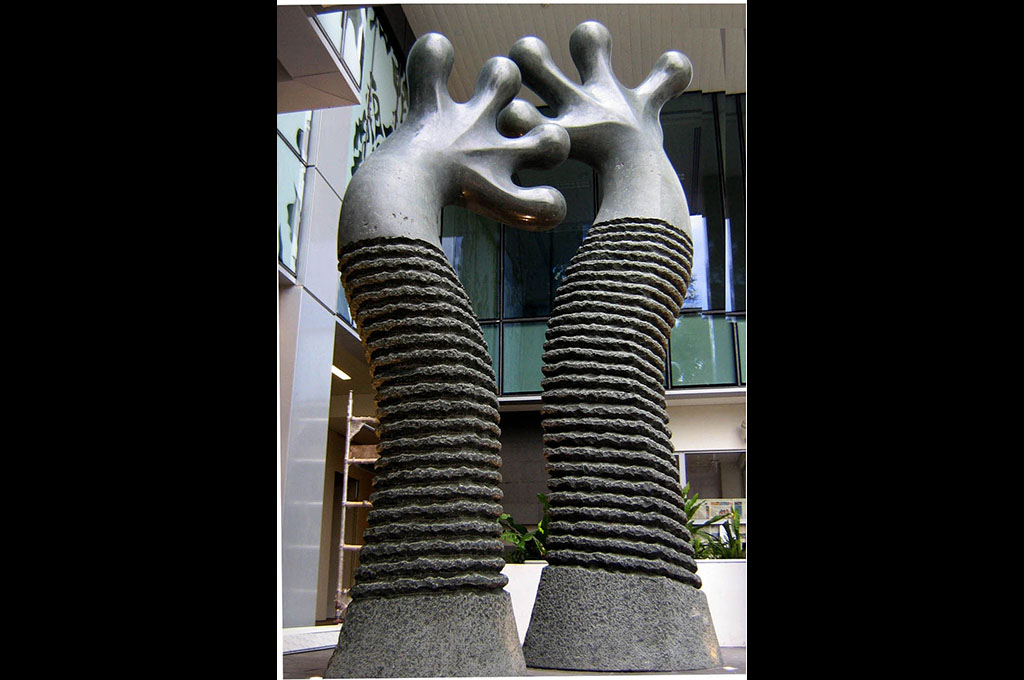
Art Tree by Han Sai Por in 2006 is located at The Luxe, 6 Handy in Singapore. Han Sai Por is well-known for her sculptures carved in stone, bringing to life figurative forms and organic shapes to hefty granite blocks. This piece, in particular spoke to me because it looks like two cells working together for the creation of art. That’s just my interpretation, but I also love that it is a tree. Tree’s resemble growth, changes, and life. I love that she created a piece like this and called it Art Tree, because it fits perfectly. The way she sculpted the blocks is beautiful, and the shapes she created make me curious on her exact techniques. The shape, and emotion that I receive from this as a viewer is a child-like joy full of possibilities. Which I agree with whole-heartedly, because I believe art is full of possibilities depending on the artist. This piece translates into Diversity because Han Sai Por is a female, from Singapore. I would love to have a mini version of this piece on my bookshelf. It would be the center of attention because of how unique it is. My first thought is, is this piece science? Art? I believe it is both. That’s what I love about it.
Bibliography
 Indigenous Voice
These are all very beautiful pieces. The art world became very diverse during the era and continues to do so. The rug really caught my attention, I really thought it was a photograph somewhere in the mountains before looking closer and realizing those were fabric fibers. I also really liked the Art Tree, at first, it reminded me of a geckos legs and feet before I looked closer and realized they also resemble bonsai trees. The symbolism and meaning behind all of these pieces are meaningful and can have an impact on all their viewers. The street artists piece, Rage, the Flower Thrower speaks volumes to me, not only are there wars being fought overseas, but our own wars within our cities, towns, and homes. I wonder what war he’s referring to?
LikeLike
I love these pieces. You did a great job finding pieces that relate to the conflict in people, but have been skewed with the beauty that the artists put in. I love the tank and flower as well as the masked rioter throwing a bouquet. I have always been interested in war and peace, and these two pieces display the irony of controversy and the willingness to live peaceful that we all have within us. Looking at “Rage, The Flower Thrower”, I can feel the emotion he has as his arms are stretched to create momentum for the throw. He is clearly fighting for something he cares deeply about, but he’s afraid to show his face. However, looking at the bundle of flowers, the emotion shifts from rage and excitement to forgiveness and a longing for understanding.
LikeLike