Indigenous Artwork: Revitalizing and Empowering Alaskan Native Cultures
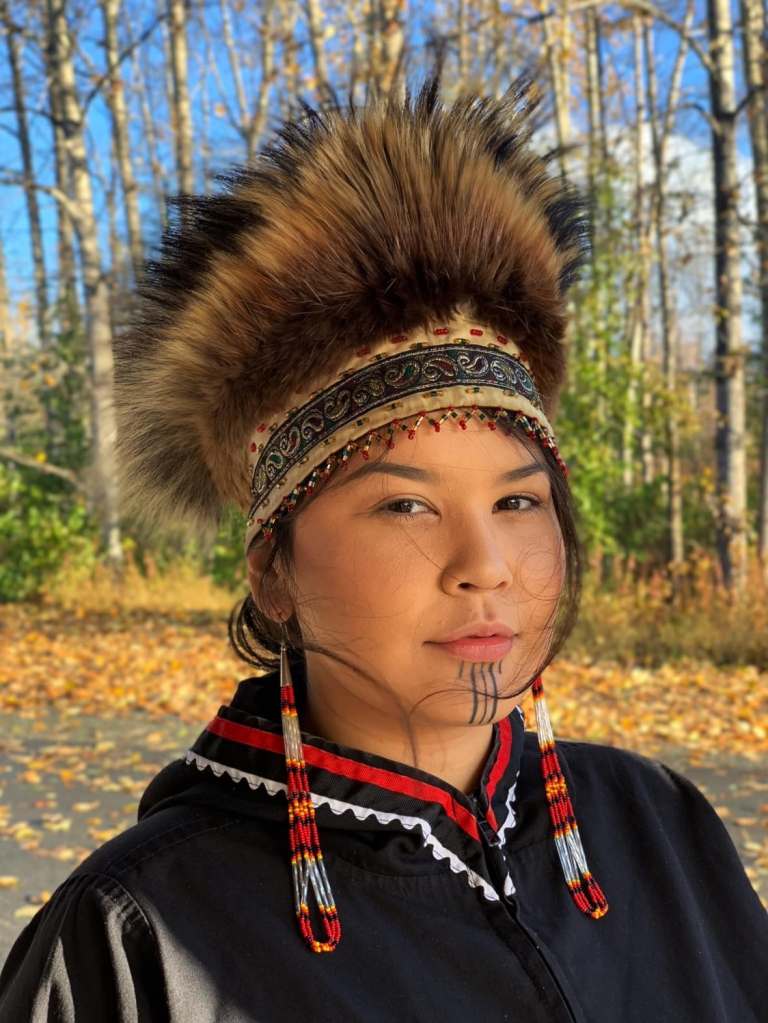
Holly Nordlum does traditional Inuit tattoos called Kakinniitor Tunniit in Inuktitut. The picture above is of Martiza Nuglene-Gomez, I’m not sure when this picture was taken or where it was taken. Based on the background and clothing, my best guess would be in Alaska or Canada. This is an ancient tradition that is being revitalized by the modern day generations like Holly Nordlum. These traditional tattoos date back to 4,000 years ago. Inuit women from across the Arctic — from Russia to Alaska — have facial tattoos. The tattoos can be inked on a woman’s body, on their hands, wrists and shoulders. For some, it’s a mark of beauty. For others, they represent significant milestones, such as marriage, children, or spiritual beliefs. These tattoos are done with a needle and cotton thread, which leaves a trail of ink under their skin. I love the minimal and bold strokes used for the designs.
My Grandmother Elizabeth Nayokpuk told me about these tattoos when I was little, but she said they weren’t allowed to do them or practice them because Christian missionaries saw them as evil. I chose traditional tattoos because practicing traditional tattoos again sends a message to all people about being proud of who you are and where you come from. It is revitalizing to see and learn about. I hope one day I can get some traditional tattoos, I think the experience would be healing and fulfilling for me. My Mom is still hesitant about traditional tattoos, but I think that stems from the limiting beliefs that the traditional tattoos are something to be ashamed of. I remember seeing a few people in Shishmaref with these traditional tattoos, but they weren’t seen as something to be proud of. My cousin has her chin tattoo and seeing her traditional tattoo brings me so much joy. It’s empowering for her, our community and for our culture.
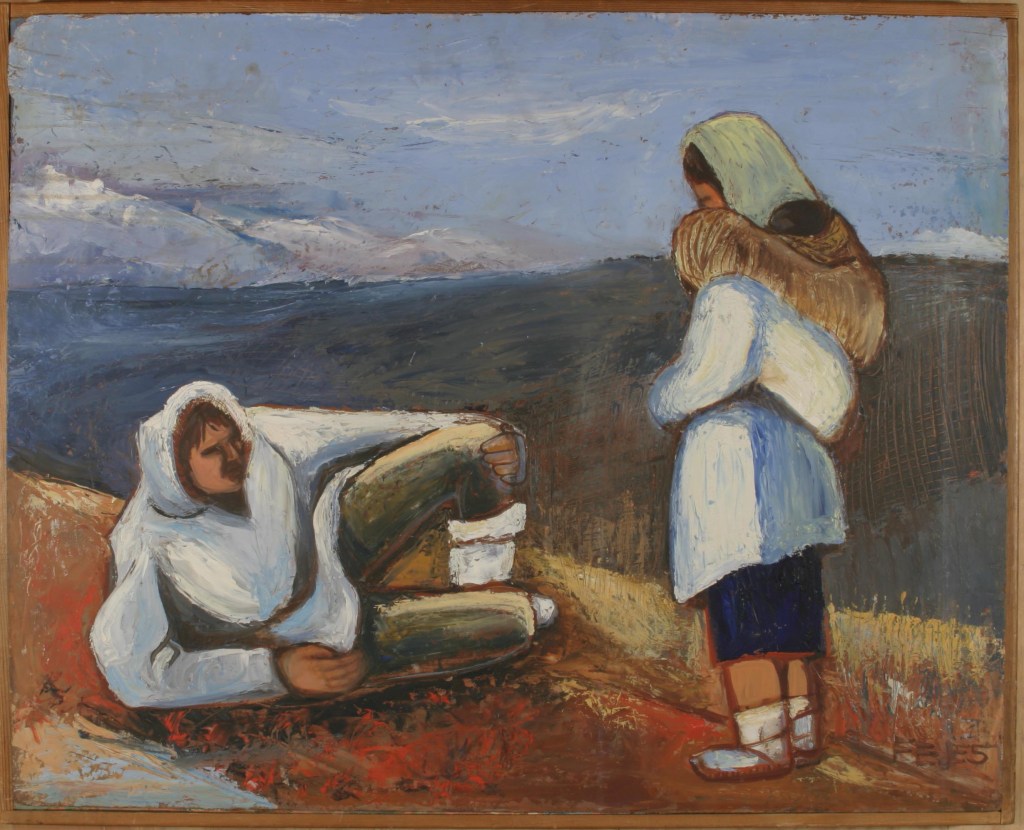
Eskimo Family, by Claire Fejes is oil on canvas. It was made in 1959 and is located at the Alaska House Art Gallery in Fairbanks, Alaska. Claire Fejes was born in New York and received her training in sculpture at the Works Progress Administration (WPA) arts projects in Manhattan. In 1942 she moved with her husband Joe Fejes to Fairbanks, Alaska. This is where Claire Fejes discovered the culture of Indigenous people in Alaska. She stopped sculpting and started using oils on canvas. One day she packed her painting supplies, a tent, some food, and she traveled to Sesaulik, an Inupiat whaling camp on Alaska’s arctic coast. This is where she found her style and inspiration– unplanned, swift, and emotionally intense – based on a deep immersion in her subjects in Sesaulik.
I chose this piece because it reminded me of berry picking with my family in Shishmaref. My grandpa, Herbie used to lay like the male subject in the painting while we picked berries and he rested. Fejes use of color is striking and I feel like it translates how deep and layered our culture is. Culture in general, is so complex. I feel like she captured the essence of Inuit culture with how detailed this painting is. She painted the fur, tundra, and mountains with varying textures. There is a story in this painting, about family, the land, kinsmanship and the importance of family and community. This piece brings back so many memories of summers in Shishmaref. I loved learning about Claire and her journey to inspiration with her artwork in Alaska. I would put a piece like this in my home, near my entryway for visitors to see.
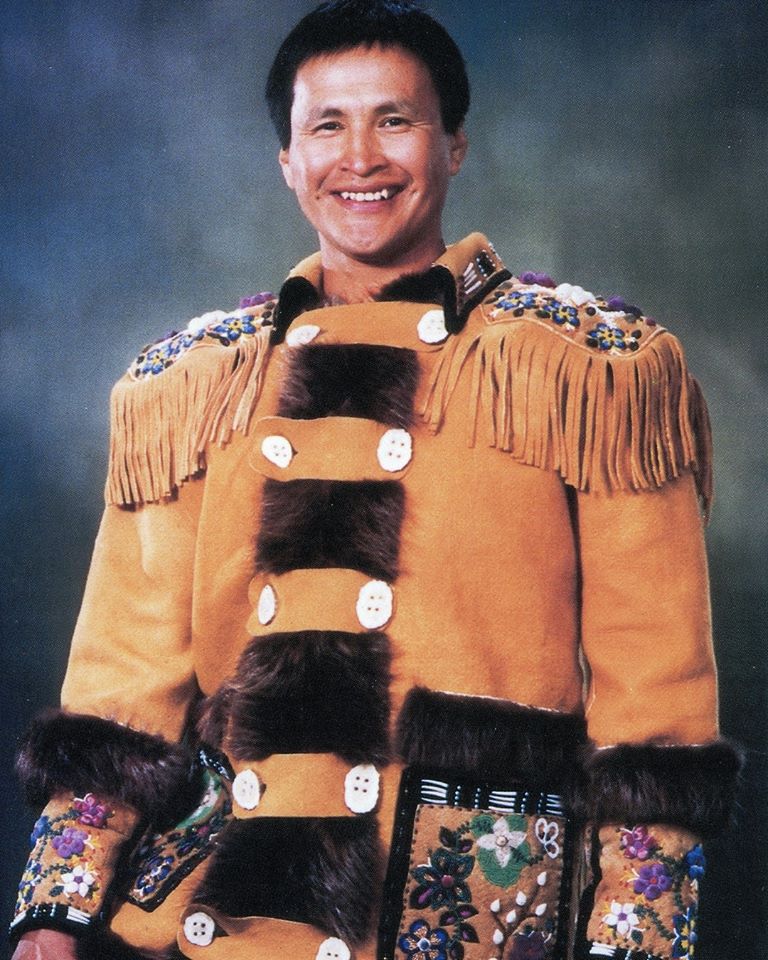
The Chief’s Coat, above was handmade by Dixie Alexander. It is made of moose skin, beaver fur, moose antler buttons, black velvet, dentalium shells, dyed caribou hair and glass seed beads. It is located at the Smithsonian Institution, National Museum of Natural History, in Washington, D.C. I’m not sure when this piece was created. I love how proud the model is in the photo.
Dixie was one of 12 children, raised in Ft. Yukon Alaska in a traditional Athabascan lifestyle. She spent more than 20 summers sharing her Athabascan culture with tourists at the Riverboat Discovery’s native village. Her traditional artwork can be found in collections worldwide at the University of Alaska Museum of the North and the Smithsonian in Washington, D.C. I worked at the Riverboat Discovery as an Alaska Native tour guide and I was honored to work with her pieces and teach people about her artwork. Her use of animal furs and the intricate designs of her beadwork show her traditional style of artwork. From what I remember from working at The Riverboat Discovery, people from nearby villages could tell where the individual was from based on these designs on coats and parkas. I chose this piece because it shows how effecient and creative Indigenous people are. Every culture has their own style and I love learning how people from all over the world express themselves. The use of animal furs and the beadwork connects the people to their environment, which is a key component of their culture. Beautifully done. I would love to have a pair of slippers or mittens made by Dixie, or even some of her beadwork. I would display it on my bookshelf.
Bibliography
“Claire Fejes.” The Alaska House, www.thealaskahouse.com/about-claire-fejes/.
“Extra Tough.” Anchorage Museum, www.anchoragemuseum.org/exhibits/extra-tough/.
 Indigenous Voice
I really love the variety of different arts you have here, I really love the traditional tattoo’s! I’ve always thought that they are so powerful and beautiful. I also love the details on the Chief’s Coat. Thank you for sharing!
LikeLike