Non Western Art

Indigenous Artwork: Revitalizing and Empowering Alaskan Native Cultures

Holly Nordlum hand stitches and hand pokes the intricate Inuit designs on Maritza Nuglene-Gomez.


Holly Nordlum does traditional Inuit tattoos called Kakinniitor Tunniit in Inuktitut. The picture above is of Martiza Nuglene-Gomez, I’m not sure when this picture was taken or where it was taken. Based on the background and clothing, my best guess would be in Alaska or Canada. This is an ancient tradition that is being revitalized by the modern day generations like Holly Nordlum. These traditional tattoos date back to 4,000 years ago. Inuit women from across the Arctic — from Russia to Alaska — have facial tattoos. The tattoos can be inked on a woman’s body, on their hands, wrists and shoulders. For some, it’s a mark of beauty. For others, they represent significant milestones, such as marriage, children, or spiritual beliefs. These tattoos are done with a needle and cotton thread, which leaves a trail of ink under their skin. I love the minimal and bold strokes used for the designs.

My Grandmother Elizabeth Nayokpuk told me about these tattoos when I was little, but she said they weren’t allowed to do them or practice them because Christian missionaries saw them as evil. I chose traditional tattoos because practicing traditional tattoos again sends a message to all people about being proud of who you are and where you come from. It is revitalizing to see and learn about. I hope one day I can get some traditional tattoos, I think the experience would be healing and fulfilling for me. My Mom is still hesitant about traditional tattoos, but I think that stems from the limiting beliefs that the traditional tattoos are something to be ashamed of. I remember seeing a few people in Shishmaref with these traditional tattoos, but they weren’t seen as something to be proud of. My cousin has her chin tattoo and seeing her traditional tattoo brings me so much joy. It’s empowering for her, our community and for our culture.
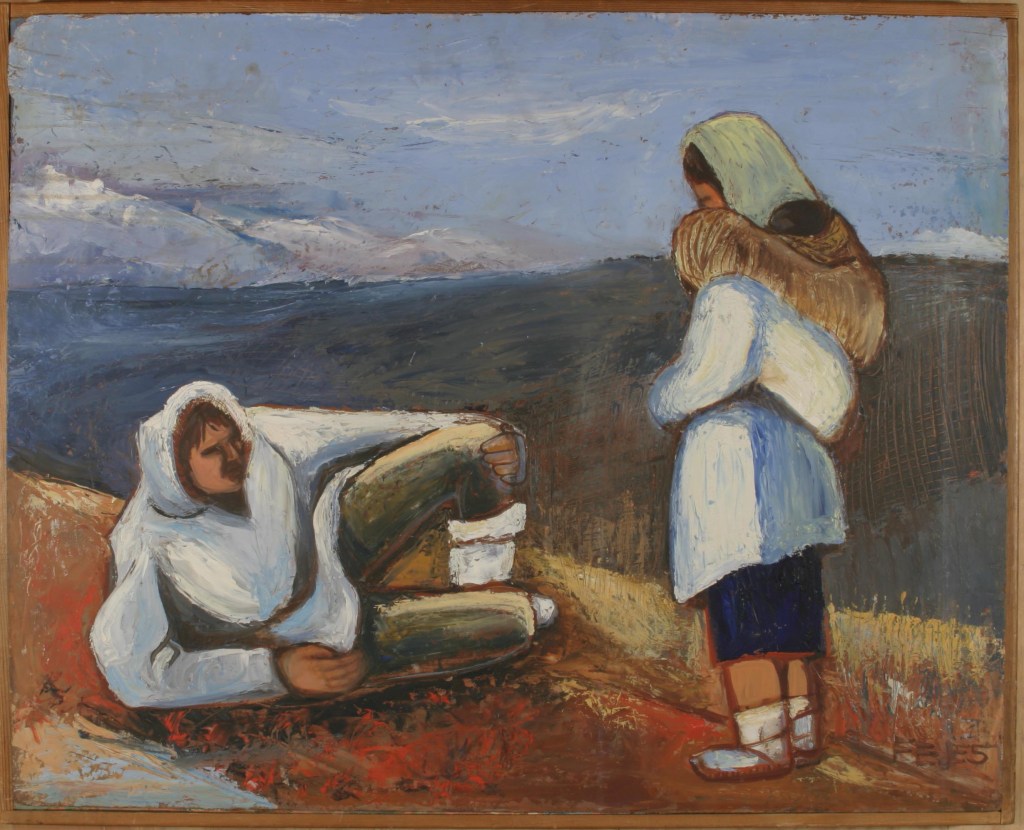
Eskimo Family, by Claire Fejes. 1959. Medium: Oil on canvas. The Alaska House Art Gallery, Fairbanks, Alaska.

Eskimo Family, by Claire Fejes is oil on canvas. It was made in 1959 and is located at the Alaska House Art Gallery in Fairbanks, Alaska. Claire Fejes was born in New York and received her training in sculpture at the Works Progress Administration (WPA) arts projects in Manhattan. In 1942 she moved with her husband Joe Fejes to Fairbanks, Alaska. This is where Claire Fejes discovered the culture of Indigenous people in Alaska. She stopped sculpting and started using oils on canvas. One day she packed her painting supplies, a tent, some food, and she traveled to Sesaulik, an Inupiat whaling camp on Alaska’s arctic coast. This is where she found her style and inspiration– unplanned, swift, and emotionally intense – based on a deep immersion in her subjects in Sesaulik.

I chose this piece because it reminded me of berry picking with my family in Shishmaref. My grandpa, Herbie used to lay like the male subject in the painting while we picked berries and he rested. Fejes use of color is striking and I feel like it translates how deep and layered our culture is. Culture in general, is so complex. I feel like she captured the essence of Inuit culture with how detailed this painting is. She painted the fur, tundra, and mountains with varying textures. There is a story in this painting, about family, the land, kinsmanship and the importance of family and community. This piece brings back so many memories of summers in Shishmaref. I loved learning about Claire and her journey to inspiration with her artwork in Alaska. I would put a piece like this in my home, near my entryway for visitors to see.
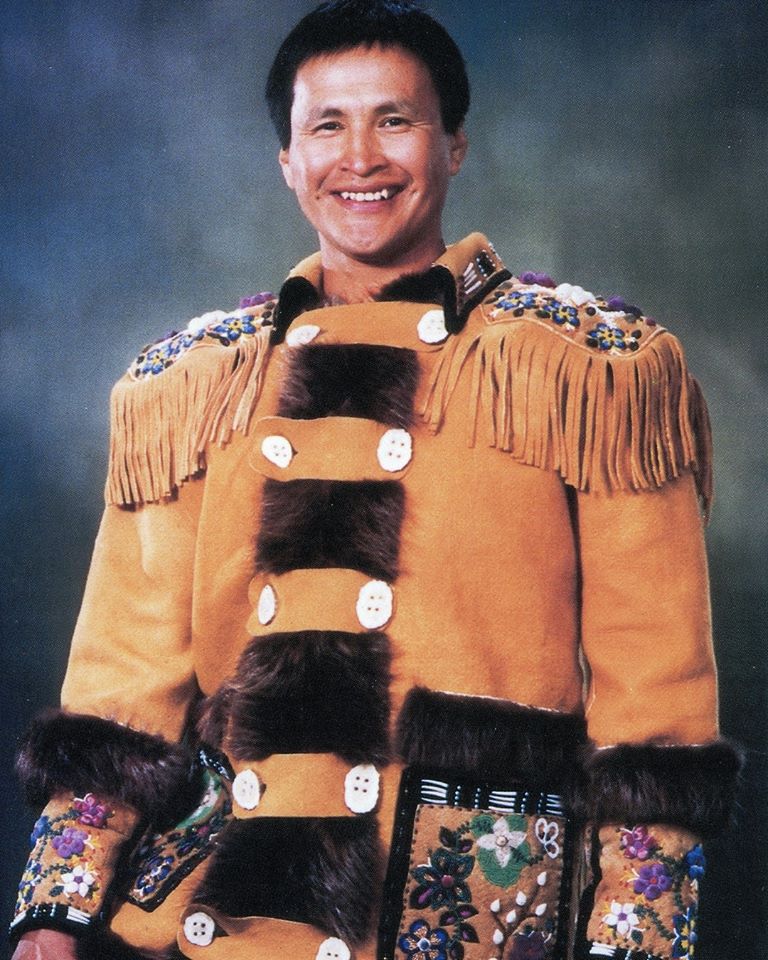
Chief’s Coat, by Dixie Alexander. Medium: Moose skin, beaver skin, moose antler buttons, black velvet, dentalium shells, dyed caribou hair and glass seed beads. Smithsonian Institution, National Museum of Natural History, Washington, D.C.

The Chief’s Coat, above was handmade by Dixie Alexander. It is made of moose skin, beaver fur, moose antler buttons, black velvet, dentalium shells, dyed caribou hair and glass seed beads. It is located at the Smithsonian Institution, National Museum of Natural History, in Washington, D.C. I’m not sure when this piece was created. I love how proud the model is in the photo.

Dixie was one of 12 children, raised in Ft. Yukon Alaska in a traditional Athabascan lifestyle. She spent more than 20 summers sharing her Athabascan culture with tourists at the Riverboat Discovery’s native village. Her traditional artwork can be found in collections worldwide at the University of Alaska Museum of the North and the Smithsonian in Washington, D.C. I worked at the Riverboat Discovery as an Alaska Native tour guide and I was honored to work with her pieces and teach people about her artwork. Her use of animal furs and the intricate designs of her beadwork show her traditional style of artwork. From what I remember from working at The Riverboat Discovery, people from nearby villages could tell where the individual was from based on these designs on coats and parkas. I chose this piece because it shows how effecient and creative Indigenous people are. Every culture has their own style and I love learning how people from all over the world express themselves. The use of animal furs and the beadwork connects the people to their environment, which is a key component of their culture. Beautifully done. I would love to have a pair of slippers or mittens made by Dixie, or even some of her beadwork. I would display it on my bookshelf.

Bibliography

How This Alaskan Woman Is Bringing Back the Art of Inuit Tattoos | CBC News.” CBCnews, CBC/Radio Canada, 9 Dec. 2018, www.cbc.ca/news/canada/north/inuit-tattoos-holly-nordlum-1.4915457.

“Claire Fejes.” The Alaska House, www.thealaskahouse.com/about-claire-fejes/.

“Morris Thompson Cultural and Visitors Center.” Fairbanks Alaska Native Museum, 17 Jan. 2011, www.morristhompsoncenter.org/athabascan-artist-dixie-alexander-named-cultural-program-director/.

Extra Tough.” Anchorage Museum, www.anchoragemuseum.org/exhibits/extra-tough/.
Post Modern Art

Diversity

Beginning in 1960, more men and women from different ethnic backgrounds found a voice and new materials in Western art.

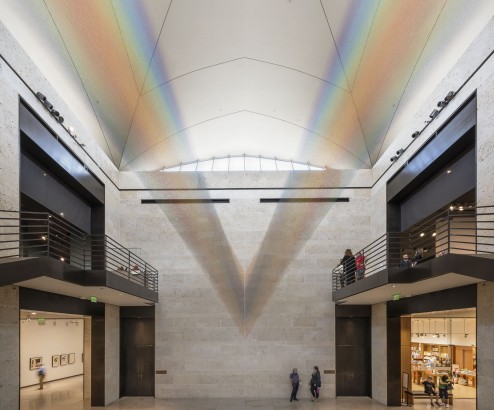
Plexus no. 34 by Gabriel Dawe was made in 2016 with gütermann thread, painted wood, hooks. This piece was commissioned for the Carter, it is large-scale andmade specifically for this site. It was made to look like frozen, Technicolor vapor. Gabriel Dawe is a Mexican-born, Dallas-based artist who specializes in sculptural marvels like this one. This piece is composed of 80 miles of thread in 18 different colors, making it one the largest pieces in the Plexus series. This piece was part of an ongoing effort by the museum to showcase more work by Texans. Dawe challenges everything from color to craft. When he was young he asked his grandmother to teach him how to sew, but she refused to teach him. Dawe challenges the “machismo” stereotype in different cultures by practicing his craft with thread. This relates to Diversity because Dawe is a Mexican-born man, practicing a craft usually done by females in most cultures. I love the use of lighting with this piece, it is so different. The materials used are beautiful, the placement is eye-catching, and the emotions I get when I look at it are awe-inspiring. It looks magical, sort of like a rainbow. I would display mini versions of his artwork on a shelf in my home, if that’s possible.

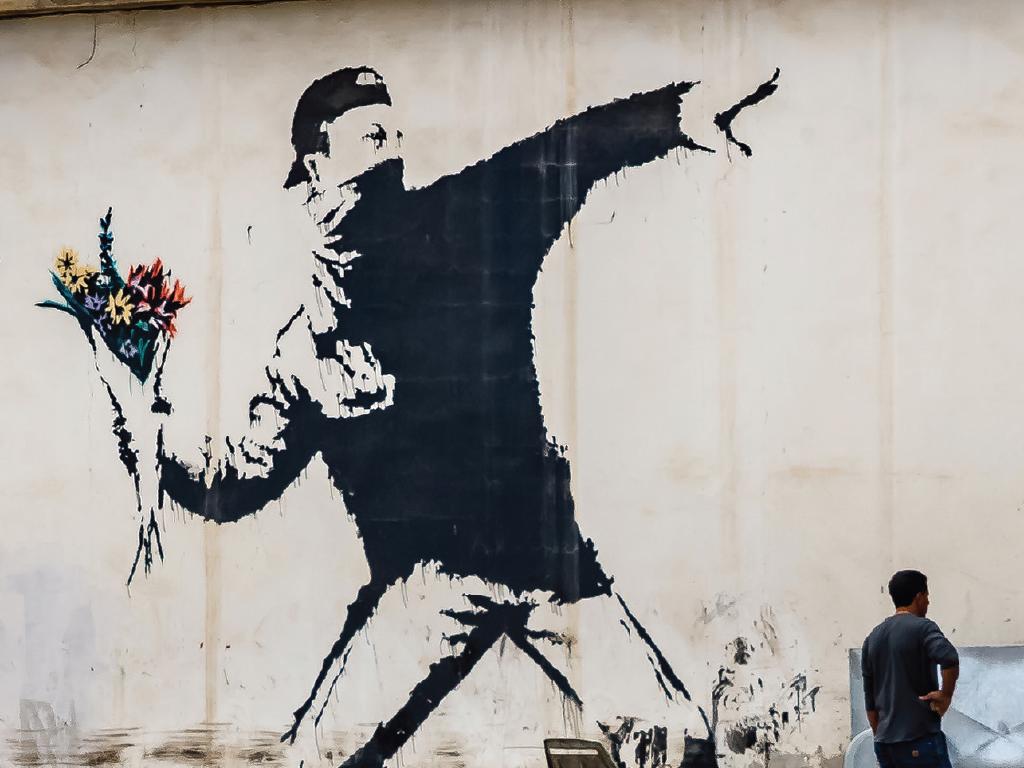
Rage, The Flower Trower, Banksy. Medium: Stencil and spray paint – Bethlehem, 2004.

Rage, The Flower Thrower was created by Banksy in 2004. He is a street artist and for this piece he used stencil and spray paint. He has worked with many different types of street art media and street art types. Even though his work is widely known and recognized for how powerful it is, his identity still remains a mystery even after 20 years. Banksy’s use of shadowing in this piece, the body language, and emotion in this piece is very powerful. I can see the rage in the way the person is standing, his face is etched with frustration. He is aiming to throw the flowers at an exact target. This piece has been theorized to be about the need for peace instead of war. Another message I enjoyed was that we need to put effort and intention into our actions to achieve peace. The subject is using flowers as a weapon, which I think symbolizes love, joy, and forgiveness. The flowers are also the only part of the piece that uses color and I believe this is to symbolize the importance of practicing kindness. Using them for the fight for peace is powerful and it has an impact on everyone that comes in contact with it, just like this piece does. This piece relates to Diversity, because street art is another art form that has been accepted and recognized in Post Modern times. Personally, I would love to have this piece displayed in a collage of street art in my living room. The message that it sends is clear and powerful.

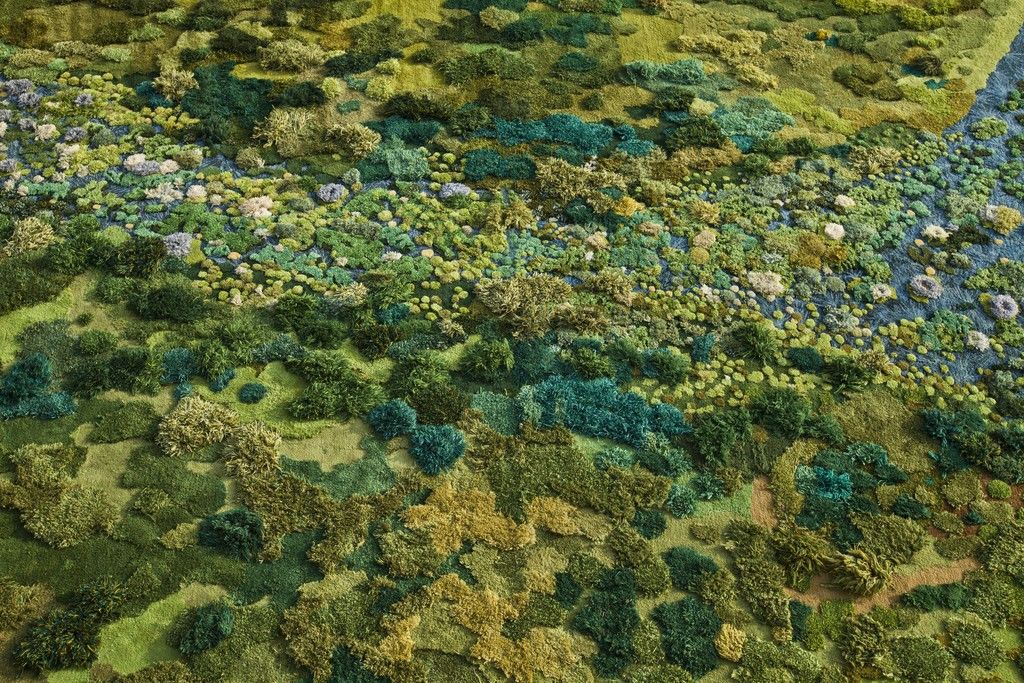
No Longer Creek, Alexandra Kehayoglou. Medium: hand-tufted wool.
2016. Design Miami/Basel.

No Longer Creek,  created by Alexandra Kehayoglou in 2016 is hand-tufted rug art made of wool. She a Native Argentine environmentalist that uses her talent to reflect on human impact on the natural landscape. This piece, in particular was a creek near her house that she grew up admiring as a kid called Raggio creek located about 10 blocks from the artist’s home—where the city meets the suburbs in Buenos Aires. It was destroyed to build a mall. This piece is on display and viewers are allowed to sit on the rug, Alexandra actually prefers if her art has some wear because it brings the piece to life. Viewers are encouraged to reflect on the effects of man-made landscaping. I think Alexandra took a special place, this creek and created a message about the importance of preserving nature. Her use of colors, her technique to create texture, is impeccable. It looks so realistic, and I can only imagine sitting on it and seeing it in person creates an even bigger impact on the viewers. I would love to have one of her pieces in my home, because she found a way to bring nature into people’s homes. Her values are beautiful and that is reflected in her artwork. This relates to Diversity, because hand-tufted rug art is fairly new, and this material and medium is now recognized as artwork as it should be.

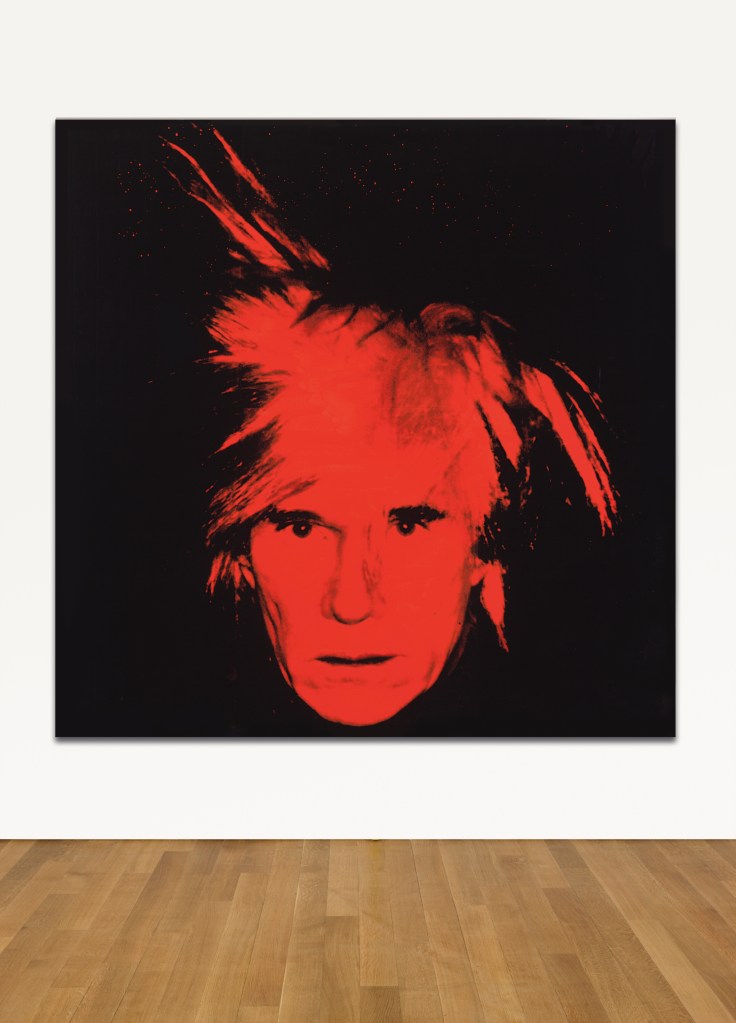
Self-Portrait, was made by Andy Warhol in 1986. It is made of synthetic polymer paint and silkscreen ink on canvas, located in the National Gallery of Art, in Washington D.C. This is arguably one of the most famous pieces of Andy’s. Almost everyone has heard of his name, and it’s crazy to think that he started out as a nerdy and shy artist. What I love most about this piece, is that Warhol created movement in this still image. This translates into Diversity, because of the use of new materials used in this Pop Art piece. He focused on Warhol’s head and wig, one of many he wore over the years. By using repetitive images, each slightly different, and overlapped the images, which produced the illusion of movement. There is a dramatic use of light and dark in this piece, which I am always drawn to. The contrast draws me in, and the expression on his face is raw, and full of emotion. I’m not sure what the exact emotion is, but it’s true and honest. I think this is Andy Warhol in full transparency, which is beautiful. There’s a lot of honesty in this piece. I would add this to my collage in my living room, next to a few other powerful pieces.

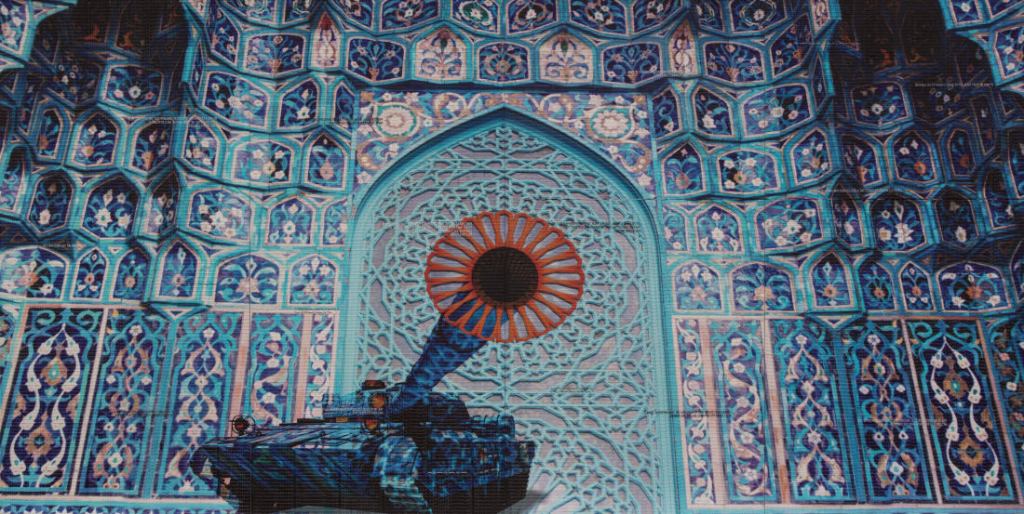
Camouflage, Abdulnasser Gharem. MediumL Digital print and lacquer paint on rubber stamps on aluminum.

Camouflage, created by Abdulnasser Gharem is a digital print and lacquer paint on rubber stamps on aluminum. I’m unsure of where this piece is located, but what I do know is that Abdulnasser Gharem experiences as a soldier and a creator have resulted in these complex, somewhat provocative nature of his artwork. At first glance, this piece looked like a beautiful, intricate print of a flower blooming. Upon further inspection, I see that it is actually a tank. The flower looks like it is actually the blast of the tank going off. There are so many layers to this piece, that I could just keep staring at it and coming up with different conclusions. Gharem often uses Islamic architect in his work, like this one. This image was a familiar image to Gharem because he was a lieutenant colonel in the Saudi Arabian army. The flower coming out of the tank disguises the deadly nature of the tank. This piece is beautiful with the texture, pattern, use of colors and the architect involved to create the image. At first glance I just thought It was beautiful, but after inspecting it closer I felt concerned for the message that this piece was sending. It’s alarmingly beautiful, if that makes sense. I think Gharem’s ability to create beauty out of something that can be so destructive speaks volumes for what he has seen and experienced as an artist. I chose this piece because of where Gharem is from, and the medium he used to create his artwork. There is so much diversity here that I couldn’t help myself. I would display this piece with my collage of favorites in my living room.

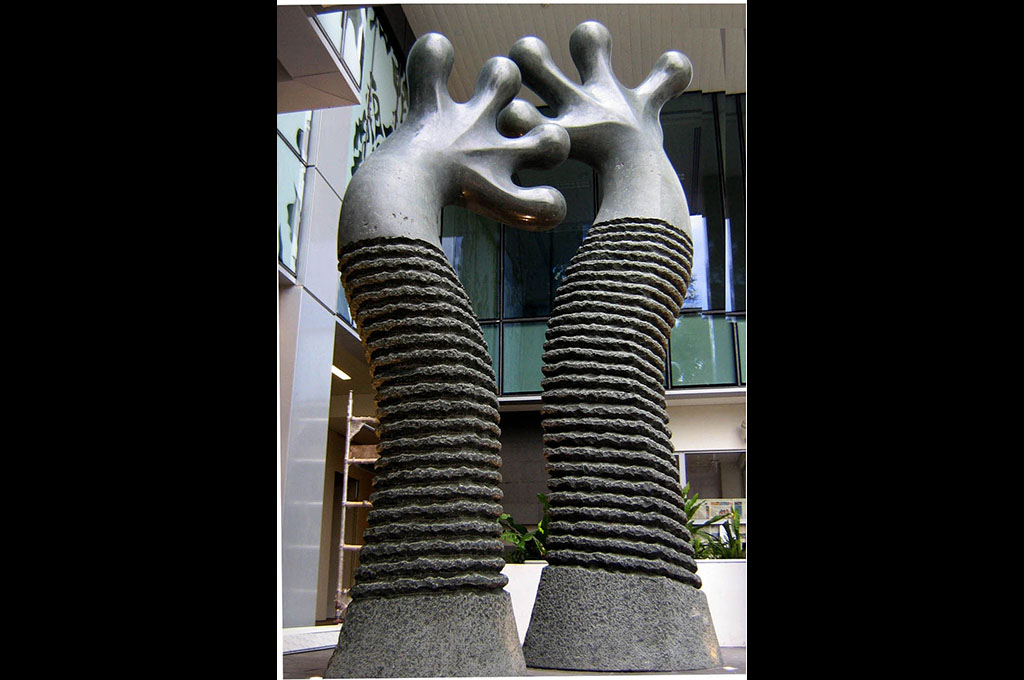
Art Tree (2006) by Han Sai Por at The Luxe, 6 Handy Road. Singapore.

Art Tree by Han Sai Por in 2006 is located at The Luxe, 6 Handy in Singapore. Han Sai Por is well-known for her sculptures carved in stone, bringing to life figurative forms and organic shapes to hefty granite blocks. This piece, in particular spoke to me because it looks like two cells working together for the creation of art. That’s just my interpretation, but I also love that it is a tree. Tree’s resemble growth, changes, and life. I love that she created a piece like this and called it Art Tree, because it fits perfectly. The way she sculpted the blocks is beautiful, and the shapes she created make me curious on her exact techniques. The shape, and emotion that I receive from this as a viewer is a child-like joy full of possibilities. Which I agree with whole-heartedly, because I believe art is full of possibilities depending on the artist. This piece translates into Diversity because Han Sai Por is a female, from Singapore. I would love to have a mini version of this piece on my bookshelf. It would be the center of attention because of how unique it is. My first thought is, is this piece science? Art? I believe it is both. That’s what I love about it.

Bibliography

http://“Postmodern Art – Modern Art Terms and Concepts.” The Art Story, www.theartstory.org/definition/postmodernism/./.

.http://Smart, Jennifer. “Gabriel Dawe Installed a Rainbow Made of 80 Miles of Thread in the Amon Carter Museum.” Dallas Observer, 4, 23 Oct. 2019, www.dallasobserver.com/arts/gabriel-dawe-installed-a-rainbow-made-of-80-miles-of-thread-in-the-amon-carter-museum-8627911.

.http://“Banksy Artworks & Famous Street Art.” The Art Story, www.theartstory.org/artist/banksy/artworks/.

http://“Banksy’s Rage, The Flower Thrower – Everything You Need to Know.” Public Delivery, 20 Feb. 2020, publicdelivery.org/banksy-flower-thrower/.

Lesser, Casey. “This Argentine Artist Is Advocating for the Environment by Reviving Vanishing Landscapes.” Artsy, 13 June 2016, www.artsy.net/article/artsy-editorial-this-argentine-artist-is-advocating-for-the-environment-by-reviving-vanishing-landscapes.

http://Lesser, Casey. “This Argentine Artist Is Advocating for the Environment by Reviving Vanishing Landscapes.” Artsy, 13 June 2016, www.artsy.net/article/artsy-editorial-this-argentine-artist-is-advocating-for-the-environment-by-reviving-vanishing-landscapes

Andy Warhol Artworks & Famous Paintings, Prints .” The Art Story, www.theartstory.org/artist/warhol-andy/artworks/.

Andy Warhol Artworks & Famous Paintings, Prints .” The Art Story, www.theartstory.org/artist/warhol-andy/artworks/.

“Camouflage III.” Abdulnasser Gharem, 17 Apr. 2020, abdulnassergharem.com/artworks/camouflage-orange.

“Camouflage III.” Abdulnasser Gharem, 17 Apr. 2020, abdulnassergharem.com/artworks/camouflage-orange.

Bonny, and Nureza Ahmad. “Han Sai Por.” Infopedia, National Library Board Singapore, 1 Aug. 2004, eresources.nlb.gov.sg/infopedia/articles/SIP_467_2004-12-23.html.

Early Modern Art

The Influence of African Americans

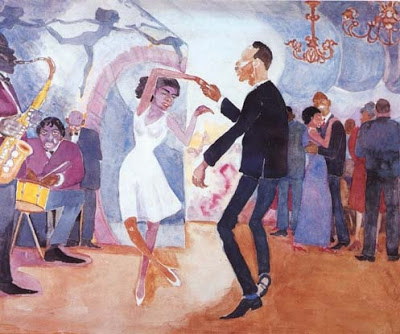
Jeunesse, by Palmer Hayden (Date and location unknown, watercolor on paper)

Jeunesse, painted by Palmer Hayden is definitely my favorite piece I have found so far. The date and location of this piece is unknown, but it was painted with watercolor on paper. It is powerful and stunning at the same time. The message that I received when I saw this painting for the first time was that this painting represented the reformation and excitement in African American culture during the explosion of culture in Harlem between the end of World War I and the middle of the 1930s. . As more African Americans moved to Harlem for the Great Migration, it became one of the most well-known spots for African American culture. Music, jazz, dance, poetry, artwork, thrived and became popular to white audiences.

The name Jeunesse could be interpreted for Jeune, or youth, in French. This name could resemble the new age of culture and enlightenment during this time for African Americans. If you look at the use of lighting in the painting, the young couple is in the spotlight of natural light and their movements are free and fluid. Looking at the people in the back, you can see they are not painted with as much light and their movements are not as open and fluid. The focus is the couple dancing to live jazz music and expressing themselves freely. I believe this is a beautiful depiction of the cultural boost of the Harlem Renassiance and a stunning example of the African American culture. The use of pastel colors, lighting, and movement make it an uplifting and calming piece. I would put this in my living room, somewhere where it would also get a lot of light and attention. The energy that I get from this painting is full of freedom, excitement, and ethnic pride. This piece is a special moment within the fight of oppression and Palmer Hayden communicated the story behind this painting very well. Some people also believe that this painting, as well as the name was also a depiction of Juneteenth and the freedom from slavery. This piece translated the influence of African Americans and their cultural freedoms with music, and dance beautifully through this painting. There is so much freedom, love, and pride in this piece. I could stare at it everyday.

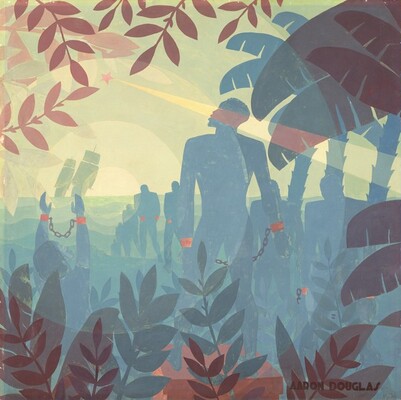
Into Bondage, by Aaron Douglas (1936, oil on canvas located in The Fine Arts Museum of San Francisco)

Into Bondage, by Aaron Douglas was created in 1936 with oil on canvas. I chose this piece because although it shows a heartbreaking, grim image of African American’s bound and enslaved for America- there is still hope. Aaron Douglas was considered a leader of the Harlem Renaissance, because of his ability to create artwork filled with pride and inspiration for African American culture, which had a powerful impact on the influence of African Americans on society. The figures in the distance are hanging their heads low, with chains on their hands.

The oppression is painted so clearly in this piece, with the body language of the figures as they are keeping their heads low, yet there is still so much hope with the woman holding up her hands towards the ship in the distance. The figure closets to the viewers eye is raising his head in optimism at where the woman is pointing and raising her hands. The use of lighting from the sun shining illuminates the hope for freedom for the future. Douglas used concentric circles in his paintings to communicate sound, specifically African American songs within his painting. This detail translates into an echoing effect, at least to me. It looks like an echo of hope and freedom is coming from the horizon. Even though this is a specific moment in time, there is still movement with the figures walking and the woman holding up her hands. I would love to have this piece in my home, maybe in a collage in my living room. The use of pastels and lighting creates a slightly sad, calm, inspiring piece with a powerful message and story. I think I’m starting to see a pattern for my love of paintings that incorporate pastels.

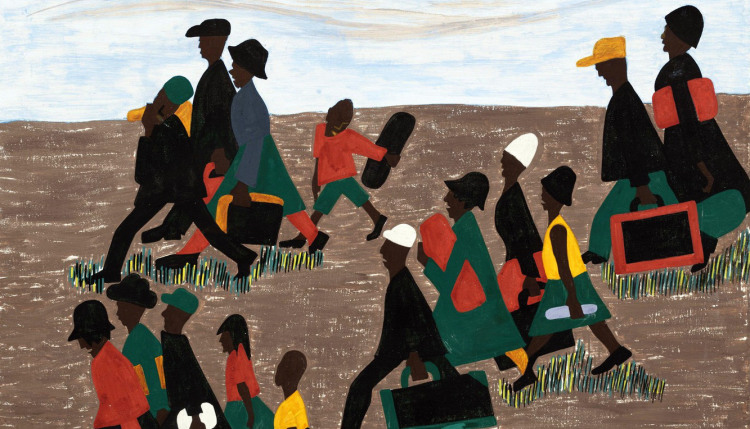
The Great Migration by Jacob Lawrence in the 1930’s is 60 panels painted casein tempera on hardboard. This series tells the story of the Great Migratation which was the mass movement of over one million African Americans. They fled from the rural South to the North from the failing cotton community, which was a monumental movement that changed our social, economic, political and cultural future. The demand for labor after World War I drove African Americans in massive numbers to major industrial centers of the North, such as Chicago, Detroit, Cleveland, St. Louis, Pittsburgh, Philadelphia, and New York City. Jacob Lawrence is one of the most well known artists of all time. His use of vivid colors with set against black and brown figures. He made a difference by telling a unified story throughout his series, like The Great Migration. He worked on all the pieces at the same time, so that they had a unified feel to the viewers. His paintings are told as a narrative, a moment in time but they all work together to tell the story of the drive and demand for labor after World War I. This translates into the influence of African Americans, because Jacob Lawrence was able to tell a clear narrative to society with vivid colors and clear intentions from the Great Migration in pursuit of the North.

I would love to add these pieces to a collage in a hallway. I would like them to tell the narrative that Jacob Lawrence intended them to have and it would be neat to be able to walk past them as the viewers consume the story of The Great Migration. The use of vivid colors is eye-catching and the movement included in the pieces is easily translated, at least for me. The message I get from these pieces is inspiring because of the drive the mass crowds of people have in pursuit to a better quality of life, despite their hardships in the past. I don’t want to speak too soon, but The Early Modern Era of artwork has been a favorite for sure.

Bibliography

http://“Palmer Hayden.” Smithsonian American Art Museum, americanart.si.edu/artist/palmer-hayden-2130.

http://“Into Bondage.” Art Object Page, www.nga.gov/collection/art-object-page.166444.html.

http://“Jacob Lawrence: The Migration Series.” Jacob Lawrence: The Migration Series, lawrencemigration.phillipscollection.org/.

http://“MoMA Learning.” MoMA, www.moma.org/learn/moma_learning/jacob-lawrence-migration-series-1940-41/.

Classical Blog Assignment

Revolution of Art- the 1700’s

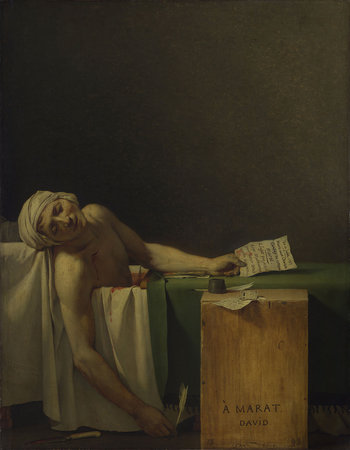
The Death of Marat, created in 1792 by Jacques-Luis David is located in the Royal Museum of Fine Arts, Brussels. This piece stood out to me because of the use of linear strokes and the message Jacques sent to his audience about the violence of the French Revolution. The influence of the American Revolution, leading into the French Revolution, is rebellion and the rise of self-governance. This is a key component to the Revolution of Art in the 1700’s. This is one of the most powerful pieces from the French Revolution, and the image includes revolutionary leader Jean-Paul Marat. Beheadings were constant at the Place de la Concorde in Paris, and new ways to behead people were a work in progress by Dr. Joseph Guillotine with the intention to make them more “humane”. Jacques was a part of the Jacobins, one of the most rebellious groups which included Georges Danton and Maximilien Robespierre. In time they voted to have Louis XVI and his Queen Marie Antoinette executed. David used his talent to give revolutionary leaders a voice, like Jean-Paul Marat. The style of painting is a strong example of Neoclassicism with the heroic male nude, drama, and the contrast between light and dark lighting. I have always enjoyed Neoclassical artwork from this time, because of the drama and the contrast used with the subjects. The messages are clearer for me, in comparison to other styles of artwork like the Rococo style of artwork.

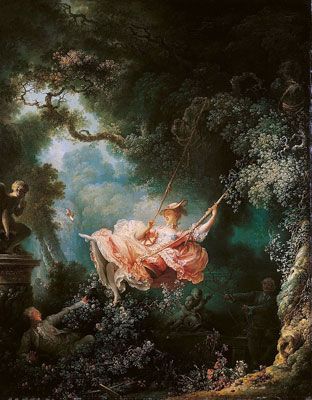
The Swing, by Jean-Honoré Fragonard (Oil on canvas – Collection of the Wallace Collection, London, United Kingdom)

The Swing, by Jean-Honoré Fragonard is an oil-on canvas Rococo style painting and is a piece of the Collection of Wallace, located in London, United Kingdom made in 1767. The painting includes mistress of the Baron de Saint-Julien, with her husband pushing her. At first glance, it looks like a beautiful, innocent moment. Upon further reflection, I noticed the man on the other side of the swing and the man that is looking up the mistress’s skirt. I chose this painting because it is also risqué and rebellious, but in a completely different way in comparison to The Death of Marat. A history painter named Doyen, was originally asked to make this painting by an “unnamed person” who wanted a painting of his mistress in a swing with him hiding in the bushes and a bishop pushing her from the other side. Doyen found this request a bit too scandalous, so they passed it to Jean-Honoré Fragonard to create and commission. This piece sends a message that society already knew during this time period, and that is that in the French eighteenth-century society men were allowed mistresses, but women had to be secretive about their lovers. They had to provide their husband with a male heir first, and hide any affairs outside of their marriages. This painting reflects what some women were doing, despite the limitations society had on them. It is rebellious, in it’s own way it is influenced by the French Revolution as well and the rise of self-governance in society. Although the message seems more subtle at first glance, this piece was a form of expression that wasn’t the societal norm at the time. Therefor, it is an important piece to the Revolution of Art in the 1700’s. The French RevoIution created many interesting subject matters for all artists, including this one. Rococo art seems to be more complex and equally as beautiful as Neoclassical, but that is only my opinion and experience. I also enjoyed learning about the rise and fall of a King and Emperor set to “Viva La Vida” in the YouTube video about the French Revolution, thank you.

The unique aspect of Rococo art that catches my eye is the gliding commonly used in pieces, theatrical style, beautiful pastel colors,  and trompe l’oeil frescoes to create surprise and the illusion of motion and drama. The Swing is a great example of all those things, including the pastel color of the girls dress, the movement of the swing gliding, naturalism, the theatrics of all the subjects in the painting, unaware of each other’s existence, and the illusion of motion and drama with the lovers and the motion of the swing. I loved the aesthetic of this piece, it was fun to learn about.

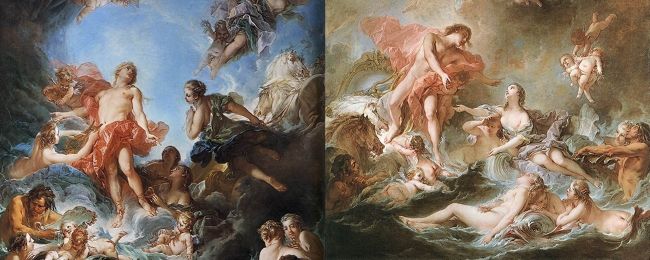
The Rising of the Sun and Setting of the Sun by Francois Boucher is oil painted on canvas in 1752, in the Wallace Collection, located in London. They were commissioned by Madame de Pompadour for tapestries to be hung in the bedroom of King Louis XV. This is a beautiful example of Rococo style of painting, with the gliding of the subject and the pastel colors. There is theatrics and drama included in the placement of the nude subjects as well. The decorative nature of this piece is a great example of Rococo art, considering it was meant to be a tapestry.

The use of symbolism with the mythology Apollo ascends into the sky with arms outstretched, chasing darkness symbolizes the influence of the authority of the monarchy at this time. The influence of the authority of the monarchy during the French Revolution is expressed in this piece, through the struggle of the lower class and the power of the monarchy ascending above them. This is an important piece of the Revolution of Art during the 1700’s, because of the message Francois Boucher is sending to society about the power of the monarchy during the 1752. The aesthetic of this piece is powerful, with the use of Greek Mythology and the theatrics used. I wouldn’t use it as a tapestry, but I would like a copy in a book of artwork from Francois Boucher.

Bibliography

“David and The Death of Marat (Article).” Khan Academy, Khan Academy, www.khanacademy.org/humanities/monarchy-enlightenment/neo-classicism/a/david-and-the-death-of-marat.

“Harris, Beth, and Steven Zucker. “Jacques-Louis David, The Death of Marat.” Smarthistory, smarthistory.org/jacques-louis-david-the-death-of-marat/.

“Fragonard Artworks & Famous Paintings.” The Art Story, www.theartstory.org/artist/fragonard-jean-honore/artworks/.

.http://“Neo-Classicism and the French Revolution.” Oxford Art Online, www.oxfordartonline.com/page/neo-classicism-and-the-french-revolution/neoclassicism-and-the-french-revolution.

.http://“National Gallery of Art.” 18th- And 19th-Century France – Neoclassicism, www.nga.gov/features/slideshows/18th-and-19th-century-france-neoclassicism.html.

https://www.theartstory.org/artist/boucher-francois/artworks/

Baroque Blog Assignment

Introduction

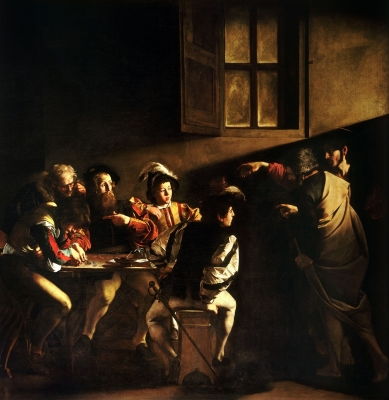
Caravaggio’s The Calling of St. Mathew, was a moment captured in time of Spiritual Awakening. St. Mathew was one of Jesus’s apostles and this is one of three works of art explaining his journey. This moment that you see here, is the moment that inspired St. Mathew to follow Jesus Christ. It was finished in 1599-1600 and it was originally made for The Contarelli Chapel in the church of the French congregation in Rome. The medium that was used was oil on canvas.

Matthew 9:9: “And when Jesus passed on from thence, he saw a man sitting in the custom house, named Matthew; and he said to him: Follow me. And he arose up and followed him.”

https://www.artble.com/artists/caravaggio/paintings/the_calling_of_saint_matthew

Caravaggio

Michelangelo Merisi da Caravaggio (1571-1610) work of art The Calling of St. Mathew, is a key moment in time because this was the start of Caravaggio’s career as one of the most well known painters in Rome. He was commissioned by This painting tells a piece of a story of the biblical story of Jesus asking Mathew, a tax collector to be one of his disciples. He is wearing a black hat and Mathew has a full, red beard. This piece of art surprised the Roman public because of the new style of and simplicity of the oil on canvas, life-size painting. He painted religious subjects and he was seen as a rebel in Rome’s society. He was not fond of mannerism, and he favored natural forms and figures opposed to idealistic forms and figures. Even saints, like Jesus were painted as ordinary people. The usual influence of royalty is not present in this painting, because everyone is painted as normal individuals.

This moment of transition is captured by the lighting used in the painting, for example, the light that is shining on the faces. This creates drama that is new and exciting to the Baroque era. The light is streaming in, and Christ is pointing to Mathew. Mathew looks confused, pointing to himself in question. The setting is in a bar, and Mathew is in the middle of counting the taxes that he has collected. The hand of Christ is reaching out to Mathew, asking him to follow him. The style that Caravaggio uses is naturalistic, and dramatic with the contrast between the light and dark subjects. His figures look like common people, in a common setting, a bar. The use of chiaroscuro, or tenebrism in this piece creates the drama needed for a piece of art that is presented as a spiritual awakening.

This was a turn of the Renassiance idealism and it challenged the old ways of viewing art. The use of darkness and lighting is very important, because it was unusual in this time period. The people are painted in a natural style, not in an idealistic way. There is different theories to who Jesus is actually pointing to, and who are the other people sitting at the table. The only people that have been identified is Mathew, with the red beard, Jesus who is pointing, and Peter, who is standing next to Jesus. This piece is appropriately called a spiritual awakening, because Caravaggio took a chance with challenging the Mannerist style with his naturalistic approach.

Opinion

I have always enjoyed contrast when it comes to paintings- So I enjoyed this one. Learning about Caravaggio and his invention of tenebrism was interesting, too. This time period is exciting because of how dramatic the art became, which to me is like a breath of fresh air. The paintings and intentions are clearer in comparison to the Northern Renaissance era. The power of the contrast draws me in and I’m more inclined to understand what is going on. I love that Caravaggio is challenging the Mannerist approach and creating his own style. The inspiration that this piece drew is also exciting- because it really was a spiritual awakening for the arts. There is raw, dramatic emotion that is presented in Caravaggio’s style. As a viewer, this art feels more familiar because although it is dramatic the subjects and individuals are painted in a natural way. It is more relatable as a viewer, with a stronger presentation that will draw you in regardless of your religious affiliation.

Bibliography

“Baroque Art and Architecture Movement Overview.” The Art Story, www.theartstory.org/movement/baroque-art-and-architecture/.

.http://“1599-1602 ‘The Calling of St. Mathew’ Caravaggio.” EnlightArt, legacy.owensboro.kctcs.edu/crunyon/Eng262/01-neoclassicism/01-intro/Enlightart.htm.

“The Calling of Saint Matthew.” Artble, 19 July 2017, www.artble.com/artists/caravaggio/paintings/the_calling_of_saint_matthew.

Renaissance Blog

Introduction

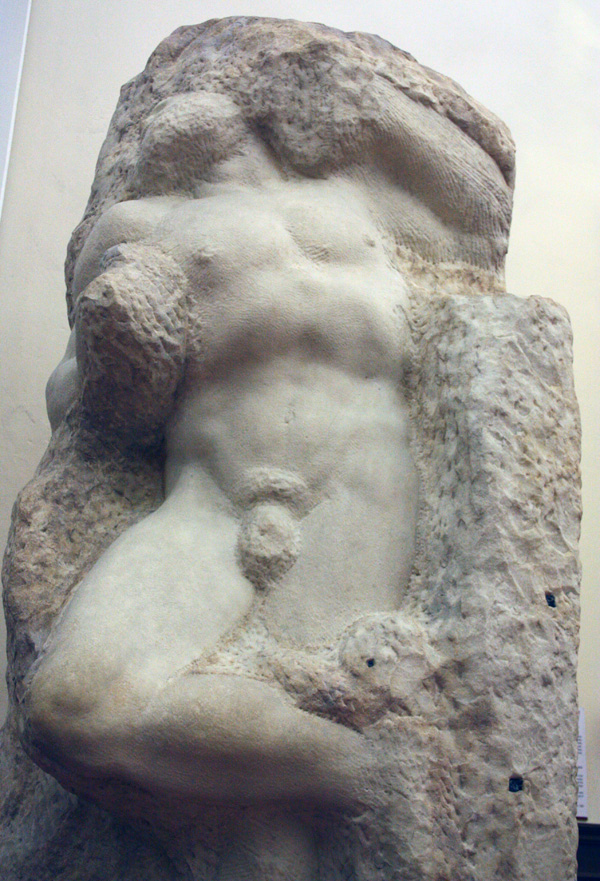
Michelangelo was commissioned to create sculptures for Pope Julius II. Pope Julius II was one of the many people impressed by Michelangelo’s sculpture of David (1501-04), which is located in Florence. Michelangelo created a series six sculptures of slaves for Pope Julius II, Atlas (1519), the Awakening Slave (1530-1533), the Young Slave (1530-1533), and the Bearded Slave (1530-1533), and the Rebellious Slave (1530-1533). The Awakening Slave is the one I will be discussing today.

Pope Julius II

These sculptures are all made of Carrara marble, and were commissioned for the tomb of Pope Julius II. Pope Julius II was highly ambitious with his plan for his tomb. He originally asked for 40 sculptures of slaves to surround a sculpture of Moses (1515), and the pope himself. The finished, or nearly finished sculptures are located in St. Peter’s, in Rome. Michelangelo was supposed to carve and build 40 sculptures to surround Moses in the tomb at the Basilica of St. Peter’s, but Pop Julius II did not have the funds to pay Michelangelo to finish this project. Michelangelo was also having trouble finding the Carrara marble needed to continue creating these sculptures. There are also theories that state that he lost interest in this project. These sculptures were left unfinished and set aside. Instead of finishing these sculptures, Michelangelo started his work with the painting the ceiling of the Sistine Chapel. The tomb was redesigned to fit the slaves with Moses. The sculptures were not named by Michelangelo, and instead they were named by other people’s interpretation of the sculptures.

Opinion

I chose the Awakening Slave sculpture in particular, because although it is the least outlined out of the four sculptures, it is extremely powerful. If not, the most powerful because it is unfinished. The figure that is carved into the marble seems to be struggling. The figure is struggling to explode from the marble that is keeping the figure contained. Looking at the body language of the slave, in it’s unnatural state, shows us how uncomfortable it is and how much effort they are putting in to escape the marble. Looking at the Awakening Slave, I feel sorry for the sculpture. Even though it is a sculpture made of clay, I want to help the person that is carved into the marble. I think this sculpture was created to demonstrate a slave trying to liberate themselves from the marble that is keeping them hostage. Michelangelo intended to leave the clay so that the sculpture is seen as struggling out of the marble. His unfinished sculptures are very expressive with the need to escape. I think he intended to send this message for the slaves, although it could just be unfinished work. These slaves that he sculpted had natural, imperfect bodies. He outlined each figure with distinctive lines and body language portraying the need to escape. It’s difficult to imagine these sculptures as just a block of marble, because of how Michelangelo transformed the marble.

Whether or not Michelangelo intended on presenting these sculptures as unfinished, they sent a clear message to the audience for their need to escape the clay. One of the interpretations of these sculptures is that Michelangelo wanted to represent the arts at this time, such as painting, architecture, and sculpture. Since Michelangelo was building and sculpting these slaves for Pope Julius II for his future death, he could have been trying to mourn the loss of freedom Pope Julius II was known for fighting for, against the churches. Pope Julius II was well known for being a warrior and activist for the arts. I think that Michelangelo was influenced by the activists, such as Pope Julius II for the arts. I think he used these slaves to communicate the agony of the arts that could come from Pope Julis II’s death.

Bibliography

“Awakening Slave.” Awakening Slave by Michelangelo, www.michelangelo.net/awakening-slave/.

“Michelangelo’s Prisoners or Slaves at the Accademia Gallery.” Guide to Accademia Gallery, .http://www.accademia.org/explore-museum/artworks/michelangelos-prisoners-slaves/.

Hansen, Paul. “Hansen.” Michaelangelo’s Slaves – Paper by Paul Hansen, www.people.vcu.edu/~djbromle/artviewsnet/portrait04/paul/slavesbymichelangelo.htm.

Art Analysis: Herbie Nayokpuk Inupiaq Art

https://www.gettyimages.com/detail/news-photo/shishmaref-united-states-artist-herbie-nayokpuk-of-news-photo/72096353

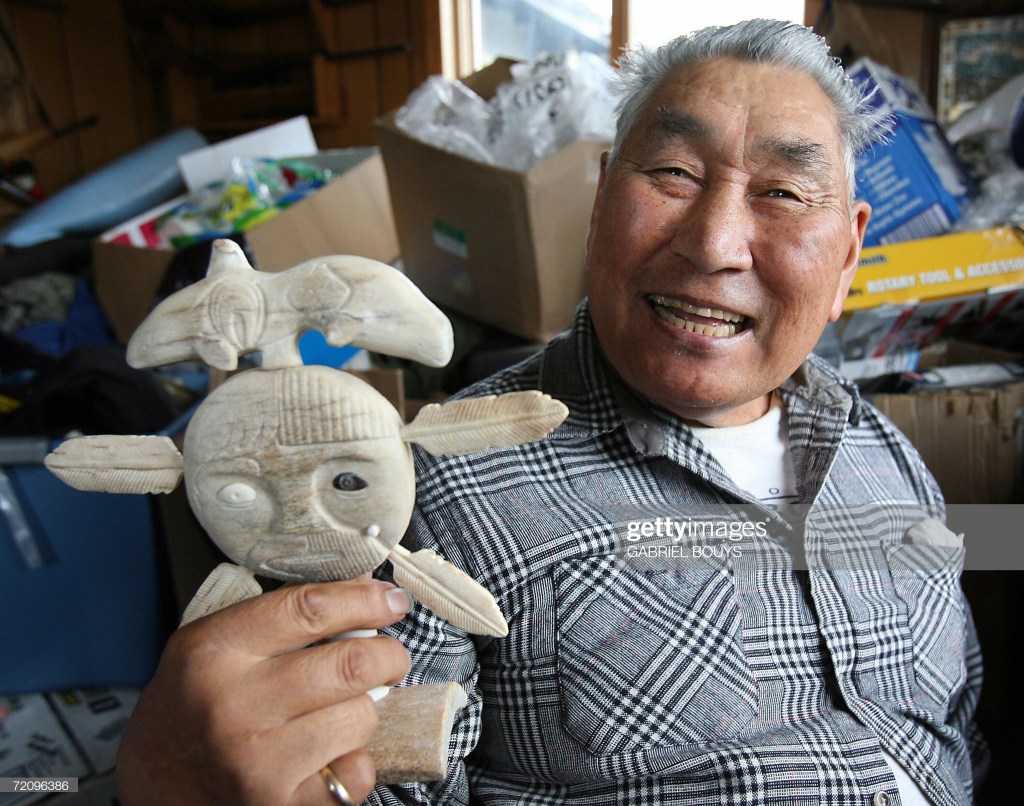
My grandfather, Herbie Nayokpuk created traditional scrimshaw Inupiaq sculptures carved out of ivory. He told traditional stories by etching on the ivory and his focus was with his sculptures and linework with his ink etchings in his ivory. Scrimshaw is carving or etching done in bone or ivory.

https://www.worthpoint.com/worthopedia/vintage-herbie-nayokpuk-eskimo-1863059320

Herbie used ivory harvested from the subsistence lifestyle my family practiced. He used the ivory to make art to tell our traditional Inupiaq stories as a form of self-expression. He carved the ivory and etched stories into the ivory, telling about family and kinsmanship, dog-mushing, hunting and gathering in Northern Alaska.

https://www.gettyimages.com/detail/news-photo/shishmaref-united-states-artist-herbie-nayokpuk-of-news-photo/72096386?uiloc=thumbnail_more_from_this_event_adp

Alaskan Natives depend on hunting and fishing for survival, therefore Inupiaq Eskimos are some of the few people allowed to sell ivory as artwork. They are allowed to sell it once it is been crafted. The walrus is not endangered and has been thriving in numbers compared to 100 years ago.

This artwork tells a story about the culture and traditions of Inupiaq people from Shishmaref, Alaska. This artwork helps Indigenous youth to understand their roots, where they come from, how they came to be, and who they are.

http://alaska.gov/kids/learn/nativearts.htm

Bibliography

Bouys, Gabriel. “Artist Herbie Nayokpuk of Shishmaref, Alaska, Works on His Eskimo…” Getty Images, http://www.gettyimages.com/detail/news-photo/shishmaref-united-states-artist-herbie-nayokpuk-of-news-photo/72096353.

“Vintage Herbie Nayokpuk Eskimo Vintage Scrimshaw Bracelet Panels Beads Buttons.” Worthpoint, http://www.worthpoint.com/worthopedia/vintage-herbie-nayokpuk-eskimo-1863059320.

“Traditional Arts.” Traditional Arts, Traditional Arts, Alaska Kids’ Corner, State of Alaska, alaska.gov/kids/learn/nativearts.htm.

Hello and Welcome

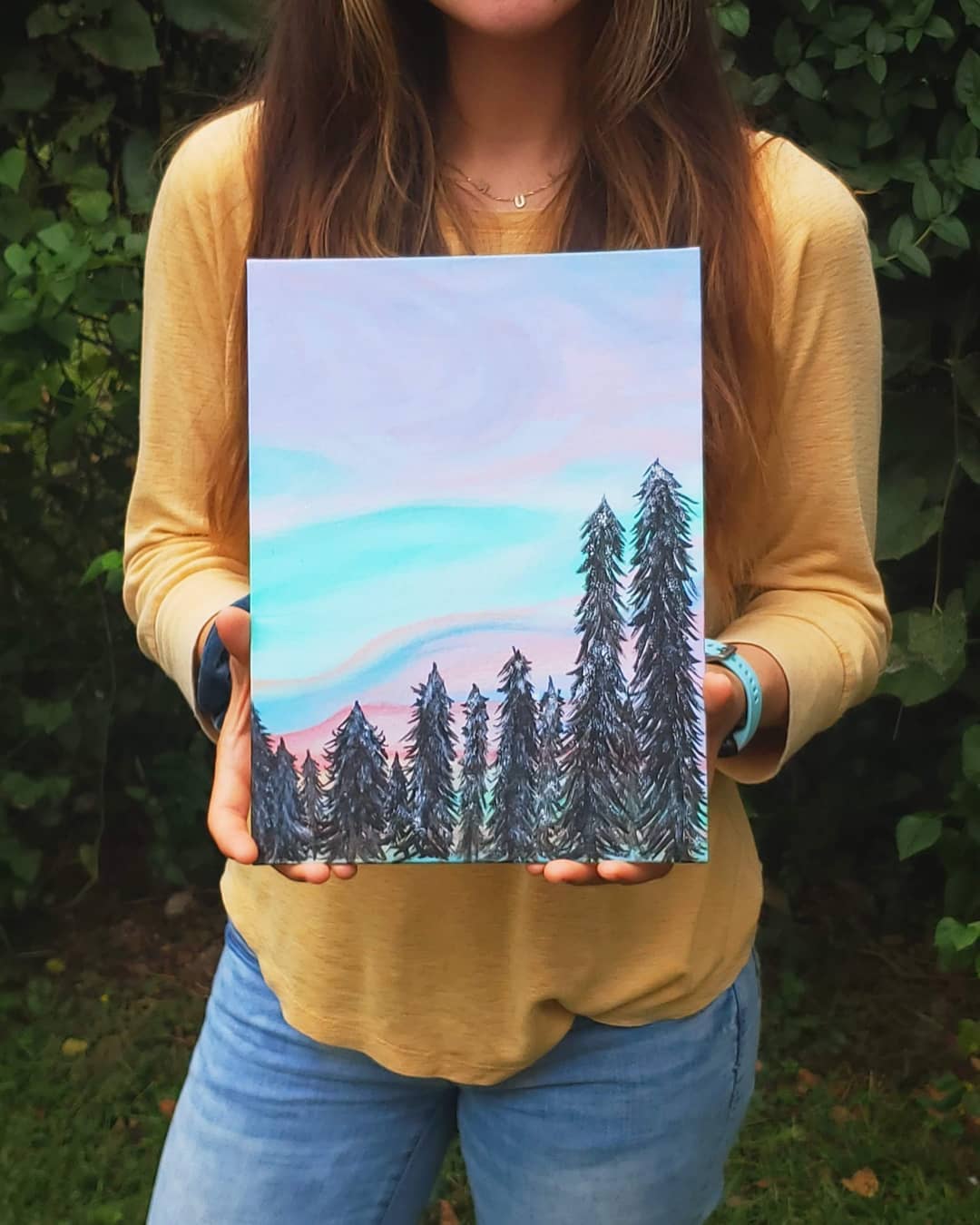
Hello, my name is Miranda Nayokpuk, but my friends call me Tuk. I am Iñupiat Eskimo and I am originally from a small island in Alaska. I am pursuing my degree in Psychology online at the University of Alaska, Fairbanks. I also do freelance artwork. My primary medium is canvas and I enjoy using acrylic paint.

My relationship to Art began at a young age when I watched my grandfather Herbie Nayokpuk create his traditional Iñupiat artwork. His primary medium was ivory from the animals we hunted to sustain our subsistence lifestyle. He etched drawings into these carvings, and he was able to tell stories with the images that he carved into the ivory with ink. Watching my grandfather create and tell our stories was an incredibly rewarding experience. It helped me understand my culture and how my tribe came to be. Art holds a lot of power and this was when my love for Art began to grow.

Here is a link to some pictures of my grandfather’s Artwork.

Design a site like this with WordPress.com
Get started